
Welcome to the museum



A major scientific discovery
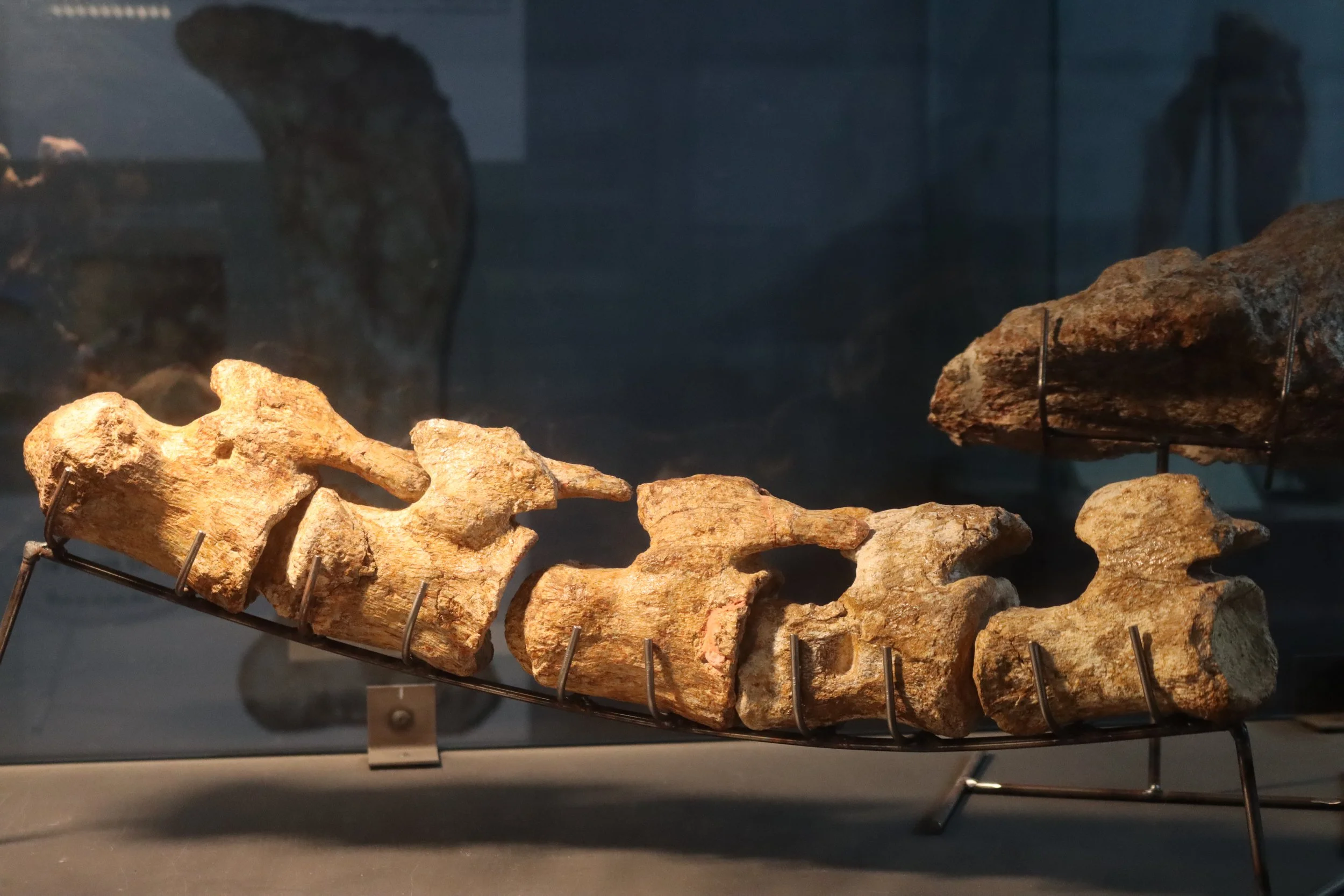
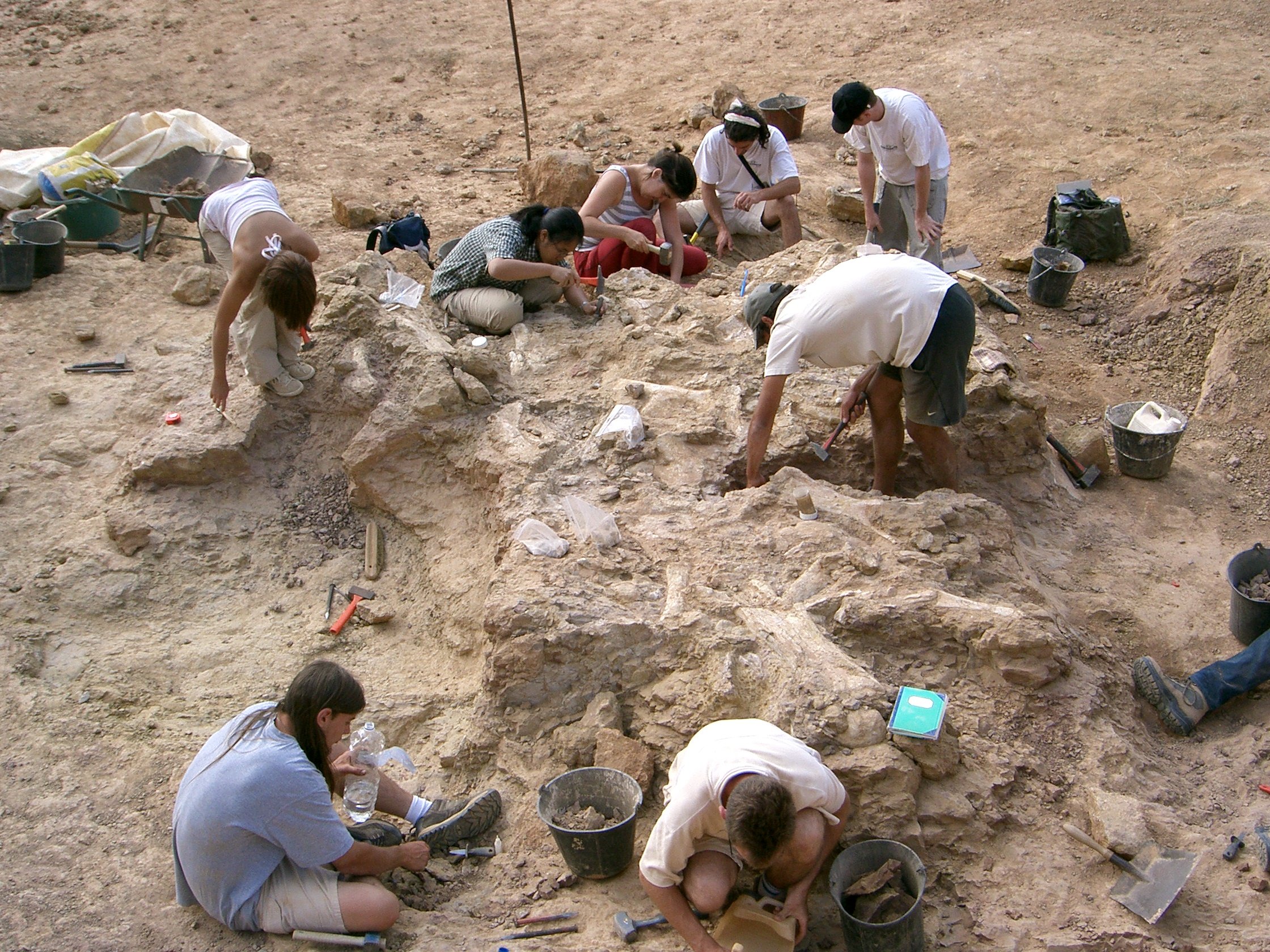
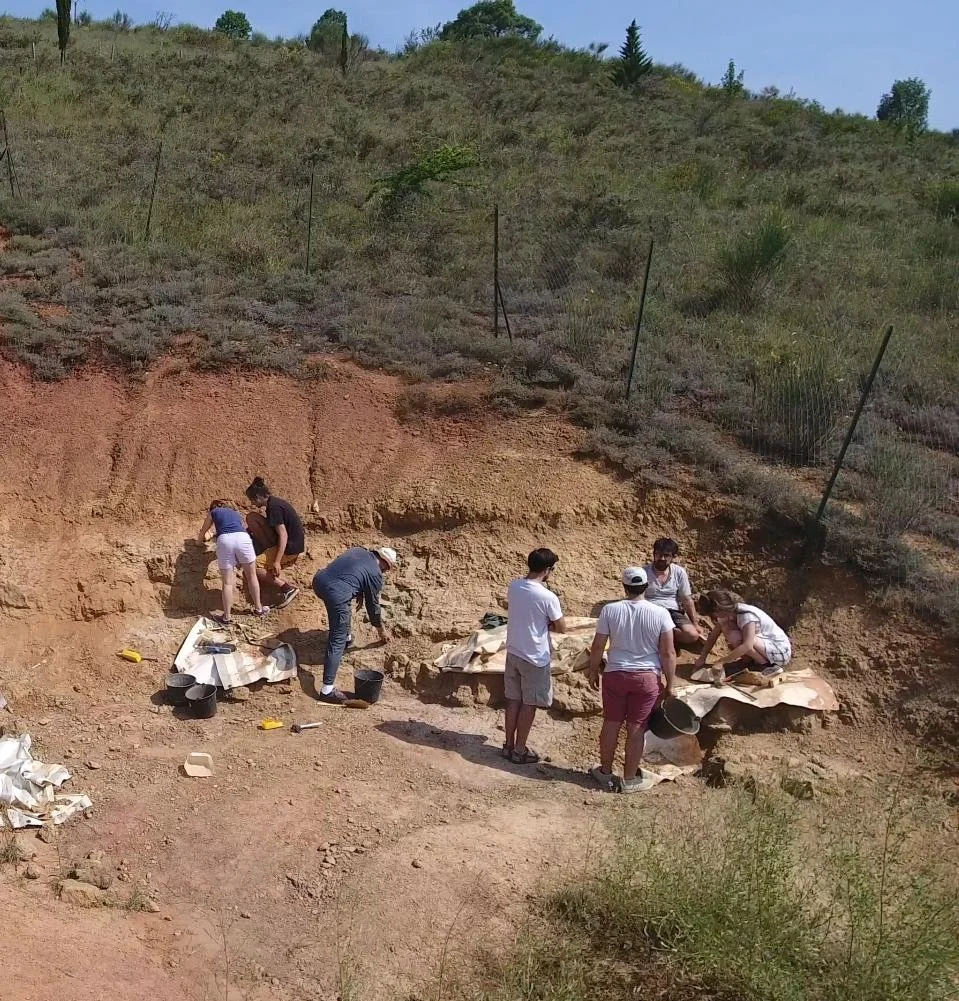
It was a unique discovery that led to the creation of the Dinosaur Museum: one of the richest fossil sites in France. In the early 1980s, a few kilometres from Espéraza, palaeontologists from the University of Paris VI, Eric Buffetaut and Jean Le Loeuff, began excavations at the site. Forty years later, thousands of bones have been excavated and new species have been identified, such as this new titanosaur, Ampelosaurus atacis, described in 1995. Its almost complete skeleton was excavated in 2001 and named Eva in honour of its discoverer, Eva Morvan. It is now one of the stars of the permanent exhibition.

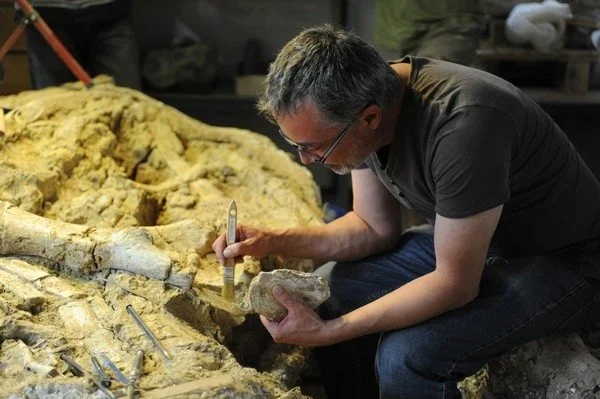
Dinosauria, an organisation dedicated to scientific research.
The museum’s collections, which are open to professional palaeontologists from around the world, contain tens of thousands of specimens of fish, turtles, crocodiles, dinosaurs (Ampelosaurus atacis, Variraptor mechinorum, Rhabdodon septimanicus) and birds (Gargantuavis philoinos).
The museum, managed by the DINOSAURIA Association, is entirely dedicated to palaeontological research and the promotion of this scientific heritage.
Dinosauria is a non-profit organisation governed by the 1901 Act. Between 95% and 100% of the organisation’s income comes from admission fees, the shop and membership fees.
A showcase of biodiversity through the ages
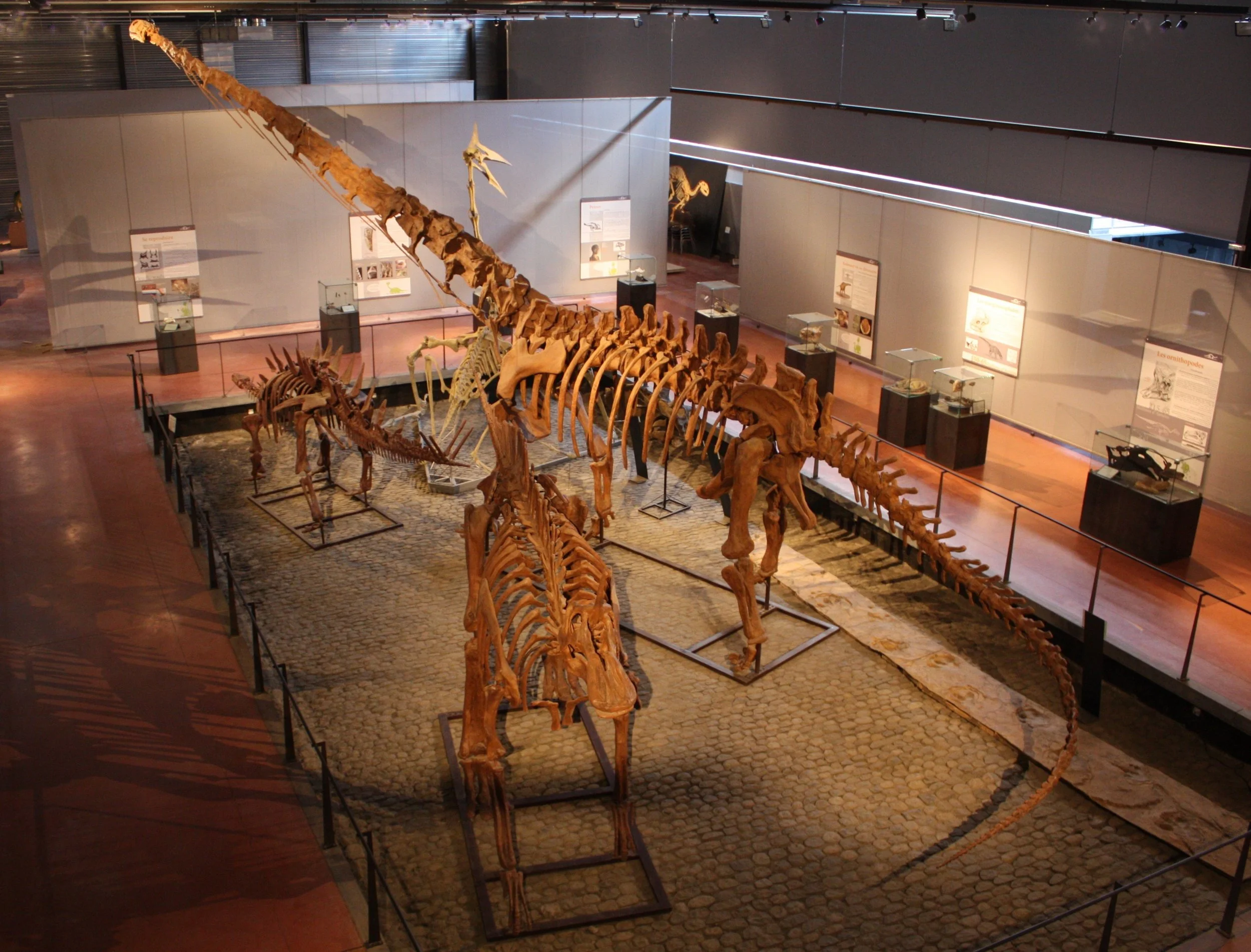
The museum dedicates over 3,000 m² to the evolution of life on Earth, from the appearance of the first traces of life. Fossilised bones, complete skeletons, life-size reconstructions and animatronic displays are all showcased to help visitors better understand the world of dinosaurs and their contemporaries. This exhibition covers all the topics currently captivating the scientific community. Games for children, workshops and themed tours round off this journey through time.

A tour of the exhibition
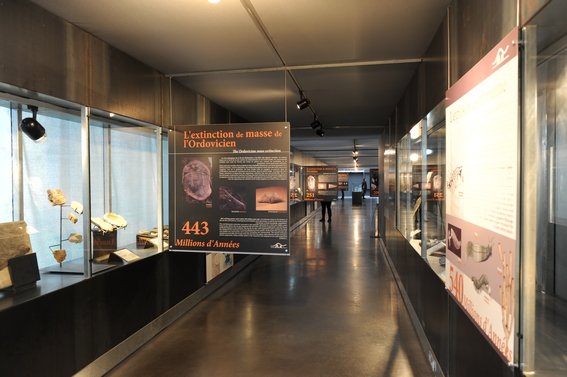
The Evolution Gallery traces the history of life on Earth long before the appearance of the dinosaurs. Visitors discover creatures, each stranger than the last, including the very first traces of life. Over time, ammonites, belemnites, flying reptiles, marine reptiles, mammal-like reptiles, crocodiles, turtles, insects and cave bears appeared… This gallery showcases 4.5 billion years of biodiversity.
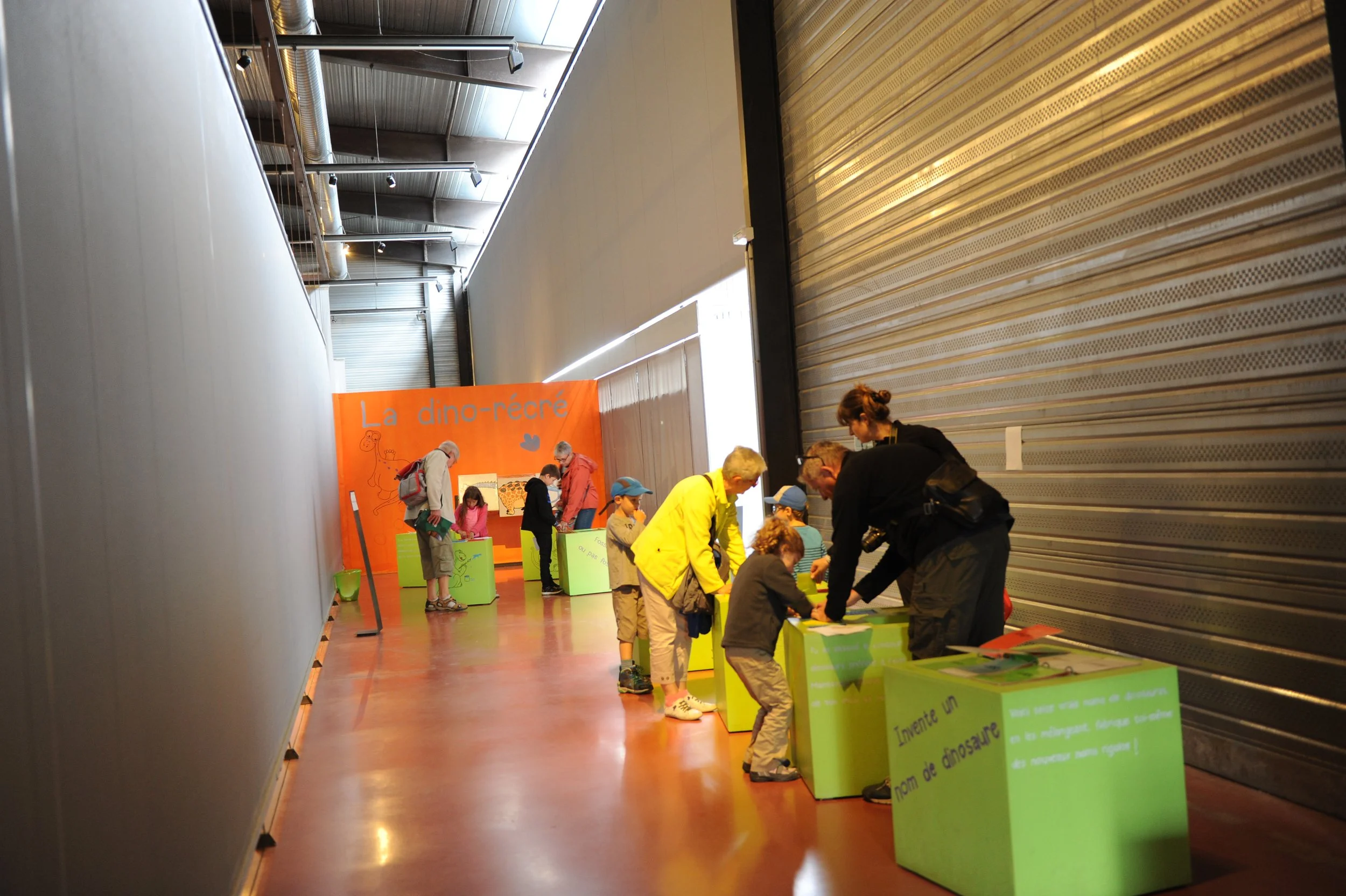
Dino-Récré offers a fun and educational break for everyone: there’s learning, revision, drawing and playing – for young and old alike!
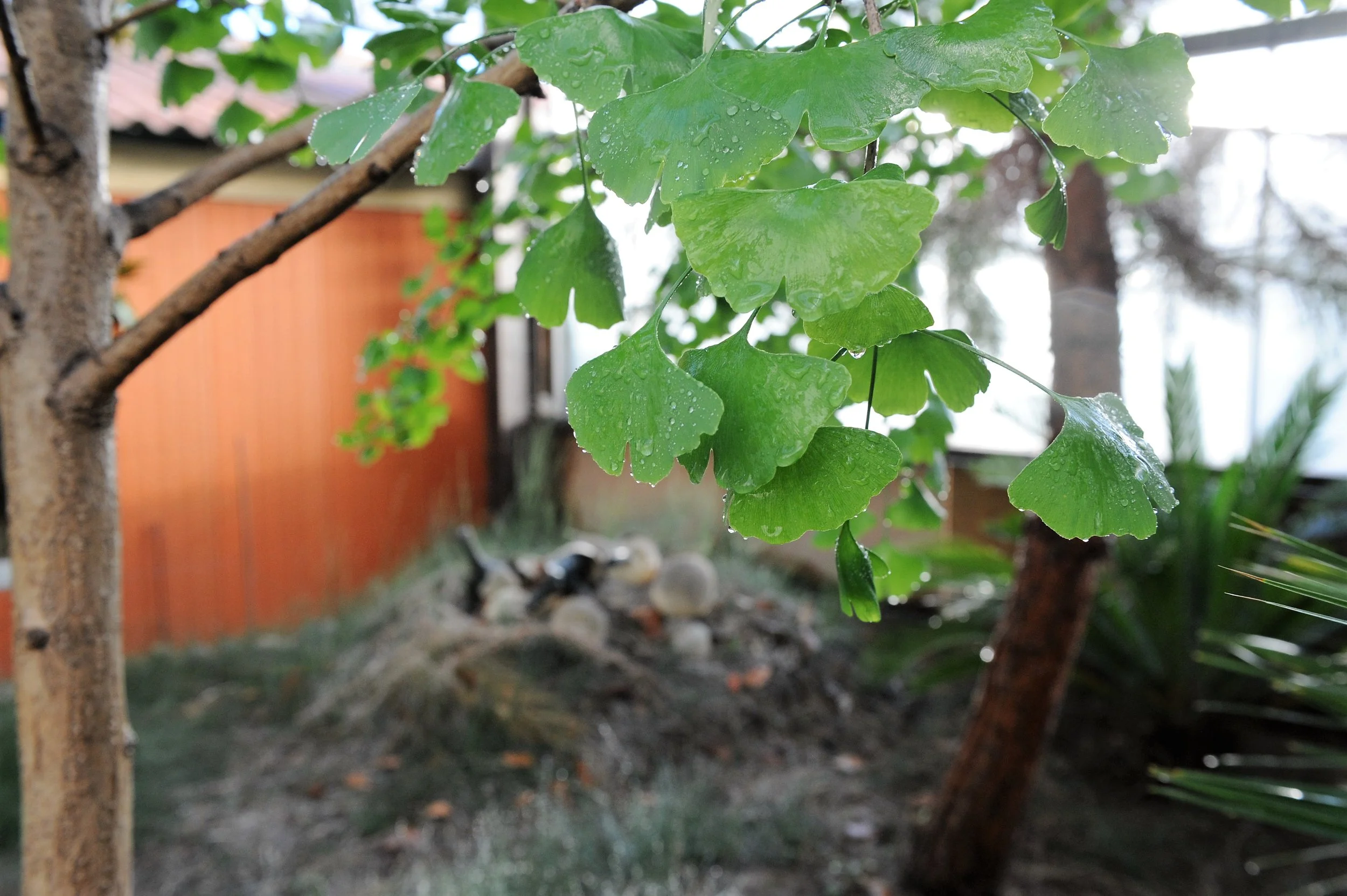
The Cretaceous greenhouse recreates an ecosystem from southern France 72 million years ago: cycads, ginkgo, tree ferns and horsetails – all species familiar to the dinosaurs. And, of course, the magnolia, which symbolises one of the major events in the Earth’s history: the emergence of flowering plants, which did not exist until the Cretaceous period. You can also discover Wollemia nobilis, which has become the star of the ‘living fossils’.
The laboratory is visible from the Cretaceous Greenhouse, allowing visitors to observe the work of the palaeontologists.
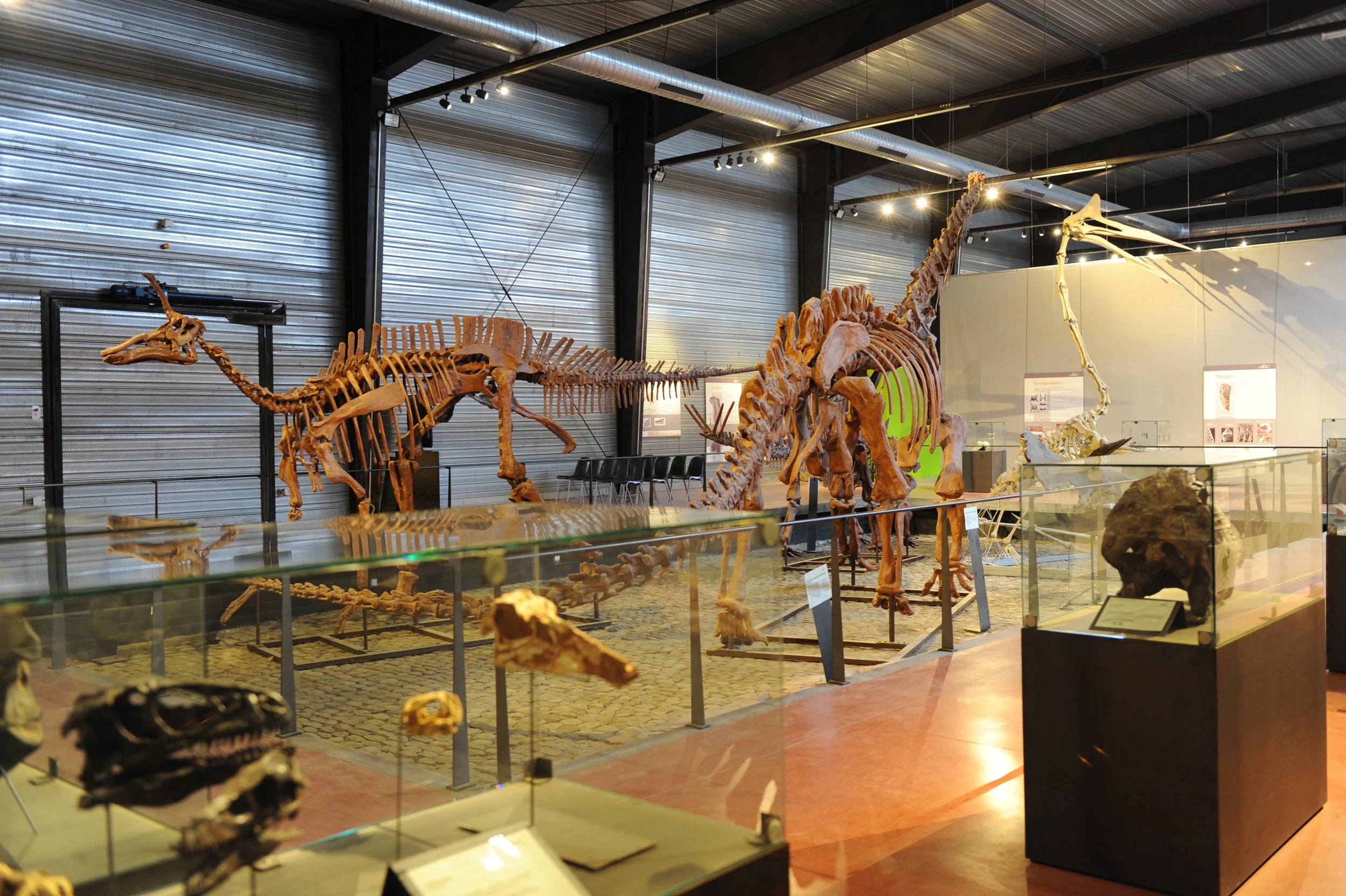
The ‘Dinosaurs of the World’ exhibition hall takes visitors on a journey through a herd of dinosaurs from all corners of the globe, some of which are being displayed for the first time in France or even in Europe: such as this 22-metre-long Mamenchisaurus or this gigantic flying reptile, the Quetzalocuatlus, with a wingspan of 12 metres. This exhibition hall answers all your questions about the biology of dinosaurs.
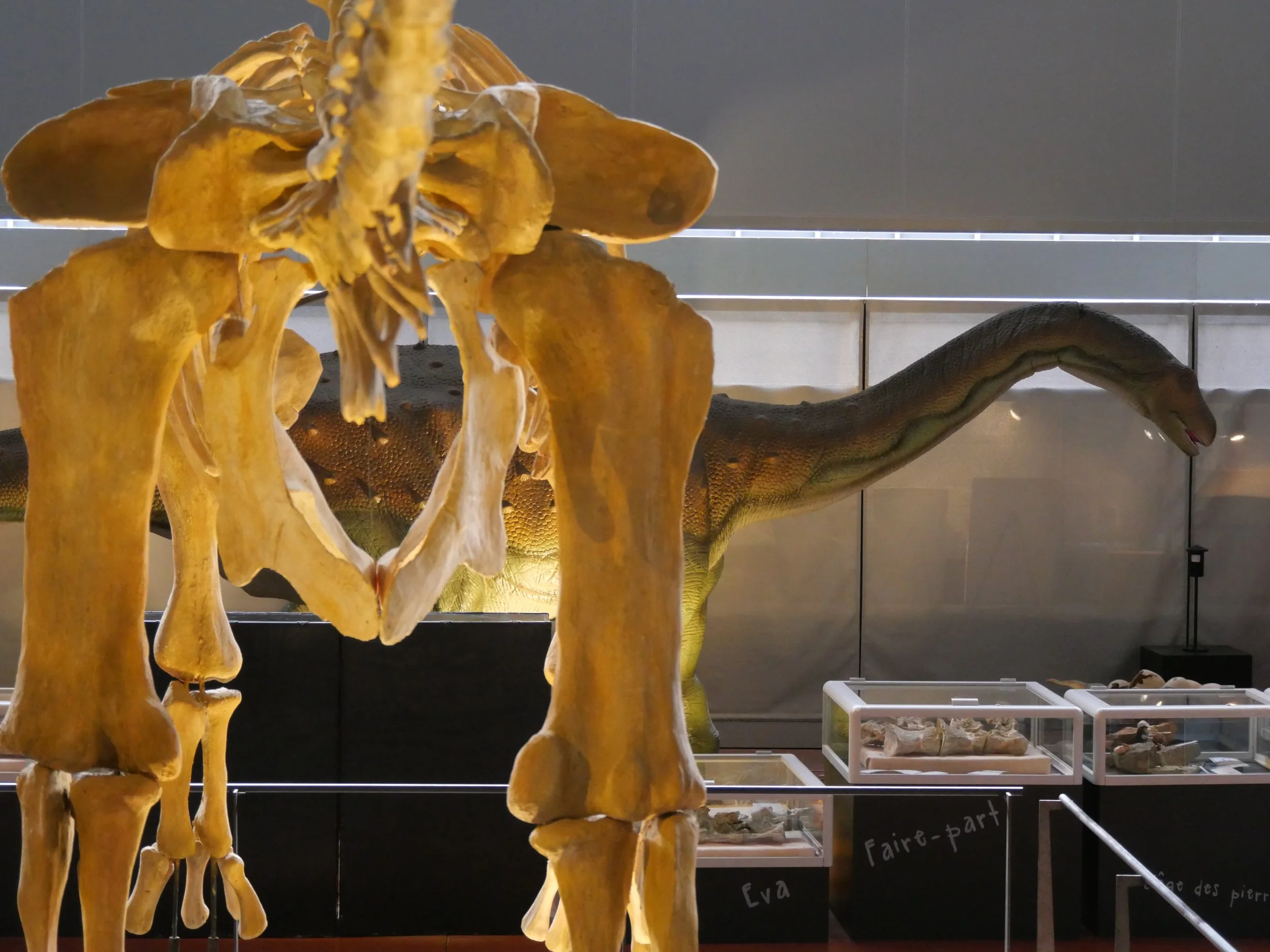
The Aude Dinosaur Hall showcases the museum’s most famous dinosaur: Ampelosaurus atacis, complete with a life-size, moving reconstruction! It is here that the full history of the region’s fossil discoveries is presented, from Variraptor to Gargantavis.
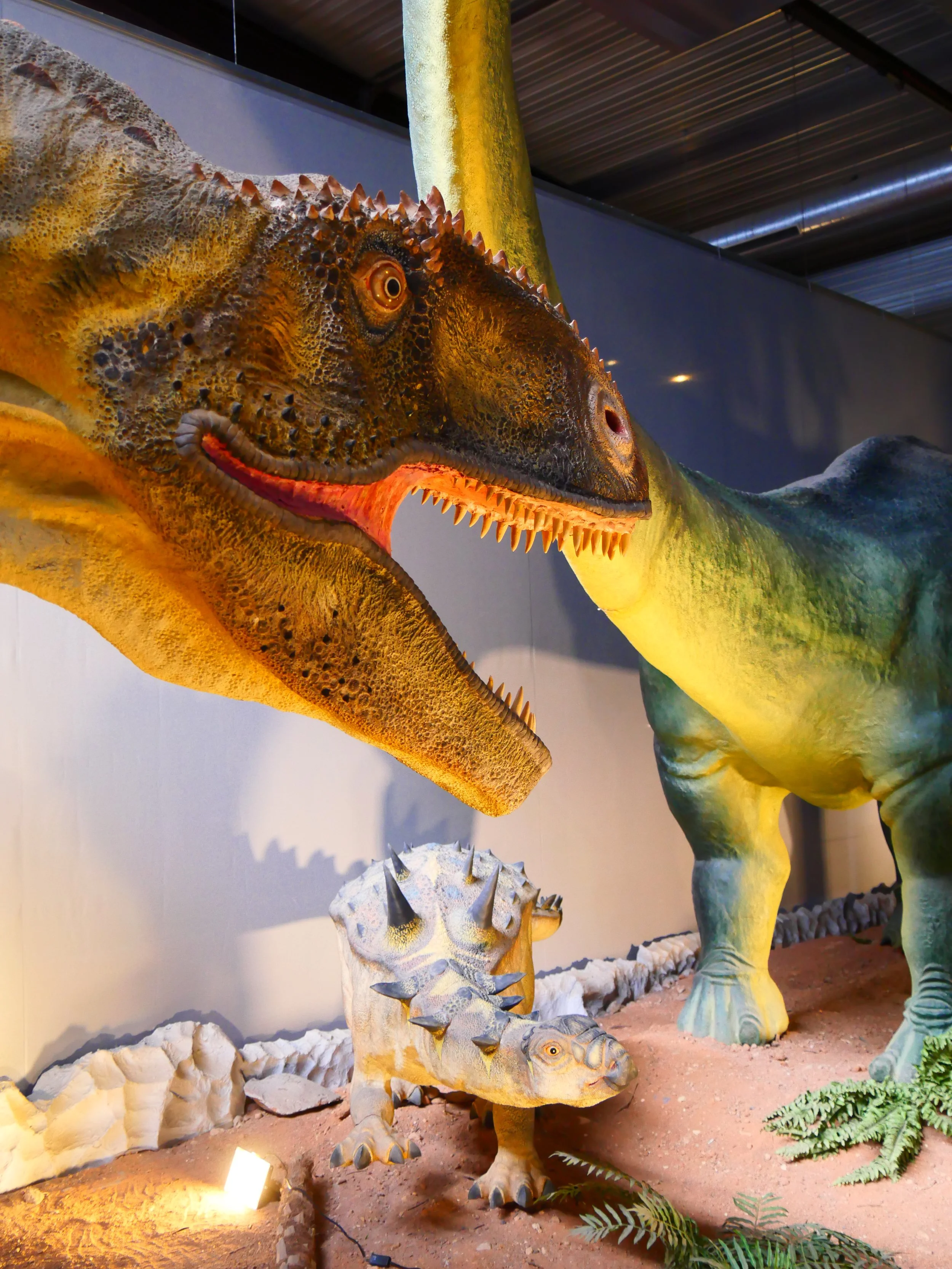
The diorama depicts life in the Aude 72 million years ago, featuring lifelike, larger-than-life dinosaurs: a snapshot of life in the Cretaceous period.

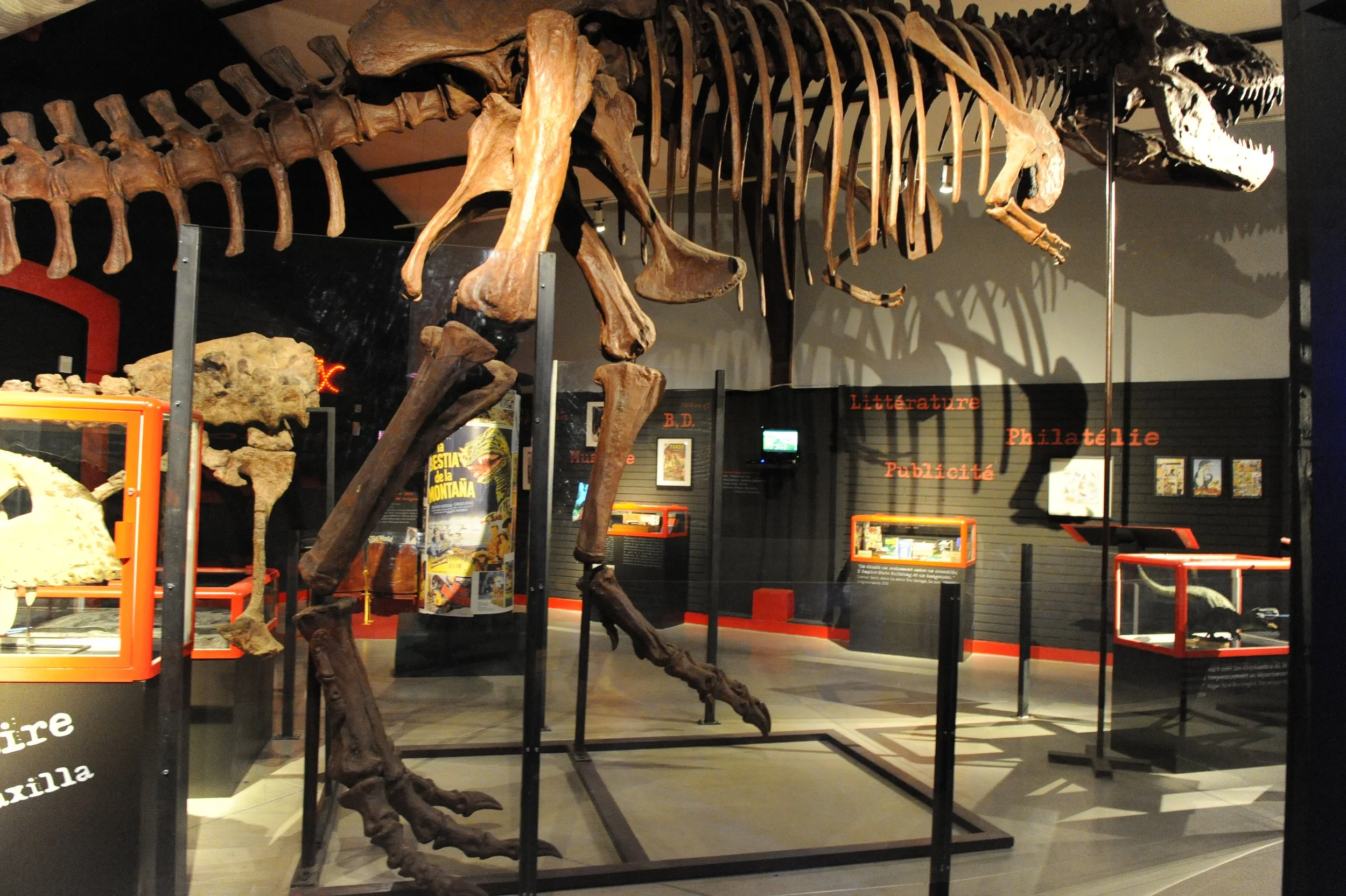
T. rex from every angle
In 2010, the Cavin family – Christiane, Michel and their children – donated a Tyrannosaurus rex animatronic to the Dinosauria association. This gift deserved a space of 300 m² dedicated solely to the most famous of all dinosaurs. The ‘Tyrannosaurus and the Lost Worlds’ exhibition traces its entire life, from the discovery of its first bones to its entry into the prestigious circle of Hollywood stars.
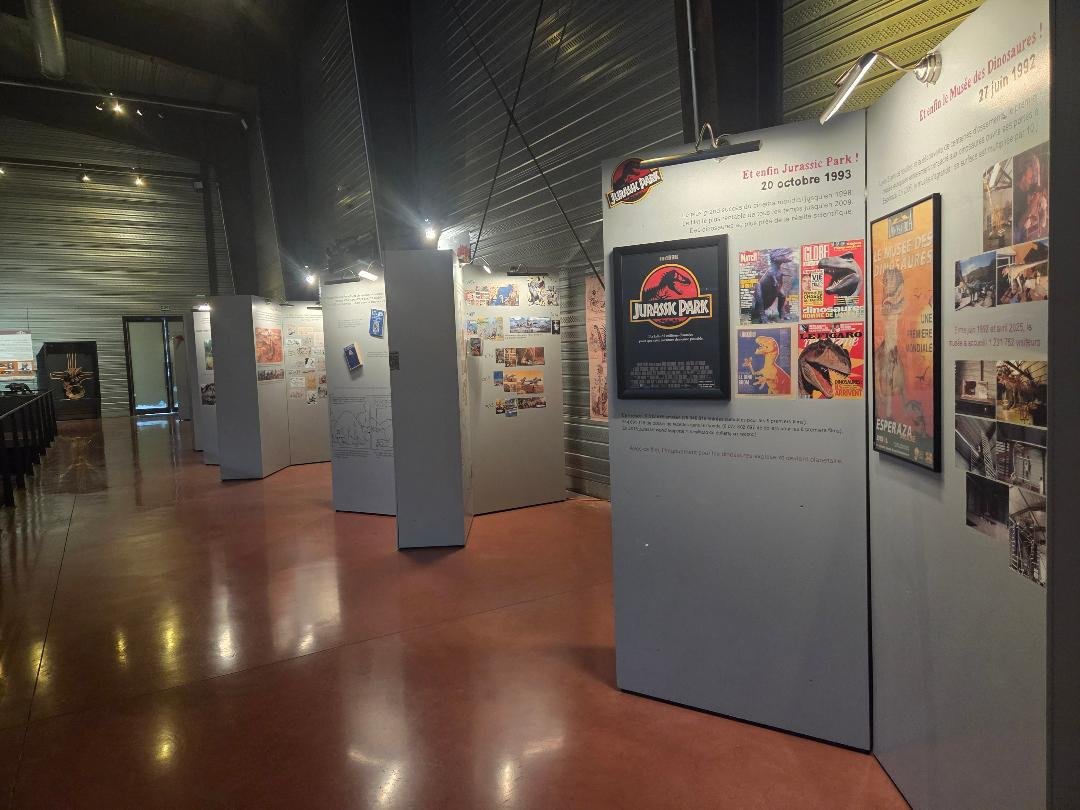
200 years of Dinomania
Dinosaurs are everywhere. No other animal seems to feature so prominently in our everyday lives. They can be found in all sorts of forms: in films, in comics, on T-shirts, plates, duvet covers, and so on. Why are they so popular? Why do these animals, which became extinct 66 million years ago, continue to fascinate us? The temporary exhibition ‘Dinomania’ answers all these questions and looks back over 200 years of fascination.
SUPPORT THE DINOSAURIA ASSOCIATION
The Museum does not receive any public funding. It is funded by donations and membership fees to the Dinosauria Association, as well as by visitor admissions. Support the association to support research!